

ISO 9001:2026 – Insights into the Next Version of the Standard
The upcoming ISO 9001:2026 revision represents a significant step forward in the evolution of quality management systems. As businesses face increasing complexity driven by globalization, digital transformation, and changing customer expectations, the need for a more adaptive and performance-focused standard has become essential.
This new version is designed to move beyond traditional quality practices and introduce a more dynamic framework that supports long-term success. Organizations will not only focus on maintaining consistency but also on improving resilience, efficiency, and strategic alignment.
A Modern Perspective on Quality Management
Quality management is no longer limited to ensuring product or service consistency. It has become a critical component of overall business strategy. The new revision reflects this shift by encouraging organizations to integrate quality into every aspect of their operations.
This means that quality objectives will need to align closely with organizational goals. Decision-making processes will increasingly rely on data, insights, and long-term planning rather than short-term fixes.
By adopting this approach, organizations can create systems that are more responsive to change and better equipped to handle uncertainty.
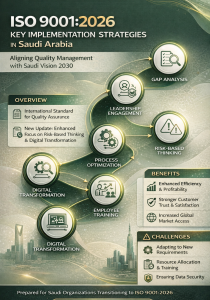
What Sets the New Standard Apart?
The upcoming version introduces several important changes that redefine how organizations approach quality management.
- Greater focus on performance outcomes rather than strict procedural compliance
- Increased integration of digital systems and data-driven processes
- Stronger emphasis on identifying and managing risks proactively
- Inclusion of environmental and sustainability considerations in operations
These elements collectively create a more flexible and practical framework for modern businesses.
The Expanding Role of Technology
Technology is expected to play a central role in ISO 9001:2026. Organizations will need to ensure that their digital systems are reliable, secure, and capable of supporting complex operations.
Automation, data analytics, and digital platforms will become essential tools for maintaining quality. However, organizations must also ensure that these systems are properly monitored and validated to avoid errors.
Additionally, employees must be equipped with the necessary skills to work effectively with these technologies. Continuous learning and adaptation will be critical in this environment.
Moving Toward Proactive Risk Thinking
One of the most important shifts in the new standard is the move toward proactive risk management. Organizations will be expected to anticipate potential challenges and address them before they impact operations.
This involves continuous monitoring of both internal processes and external factors. By leveraging data and insights, businesses can make informed decisions and reduce uncertainty.
A proactive approach not only improves operational stability but also enhances the organization’s ability to respond to unexpected changes.
Strengthening Organizational Culture and Engagement
The success of any quality management system depends on the people within the organization. ISO 9001:2026 emphasizes the importance of building a strong culture of quality and accountability.
Organizations will need to ensure that employees at all levels understand their roles and responsibilities. This includes providing clear guidance, regular training, and opportunities for involvement in improvement initiatives.
A well-engaged workforce contributes to better performance, innovation, and continuous improvement.
Supply Chain Resilience as a Priority
Supply chains are becoming increasingly complex, making it essential for organizations to manage them effectively. The new standard places greater emphasis on ensuring reliability and consistency across the supply chain.
- Regular evaluation of supplier performance to maintain quality standards
- Identification of potential risks that could disrupt operations
- Development of contingency plans to ensure continuity
By strengthening supply chain management, organizations can reduce vulnerabilities and maintain consistent delivery.
Sustainability and Long-Term Value Creation
Sustainability is becoming a key consideration in quality management. ISO 9001:2026 encourages organizations to consider environmental and social impacts when designing their processes.
This includes reducing resource consumption, managing environmental risks, and aligning operations with sustainability goals. By doing so, organizations can improve efficiency while meeting stakeholder expectations.
Sustainability also plays a role in enhancing brand reputation and building trust with customers and partners.
Leadership and Strategic Direction
Leadership will play a more active and influential role in the new standard. Decision-makers must ensure that quality management systems are aligned with organizational strategy and objectives.
Leaders are responsible for setting clear goals, monitoring performance, and fostering a culture of continuous improvement. Their involvement is crucial in ensuring that quality initiatives are effectively implemented and sustained.
Strong leadership helps organizations adapt to change and maintain a competitive edge.
Global Relevance and Regional Adaptation
ISO 9001:2026 is designed to be globally applicable while allowing organizations to adapt it to their specific contexts. This flexibility ensures that businesses in different regions can implement the standard effectively.
Organizations operating in developing markets, including Saudi Arabia, are increasingly adopting modern quality practices to enhance their competitiveness. Similarly, businesses across Saudi Arabia regions are aligning their systems with international standards to improve market access and customer confidence.
This balance between global consistency and local adaptability makes the standard highly relevant across industries.
Preparing for the Upcoming Changes
Organizations must take a structured approach to prepare for ISO 9001:2026. Early preparation will help minimize disruptions and ensure a smooth transition.
- Conduct a comprehensive review of existing quality management systems
- Update policies and procedures to reflect new requirements
- Strengthen digital infrastructure to support data-driven processes
- Provide training to employees on the updated standard
Taking these steps will help organizations align with the new requirements effectively.
Long-Term Impact on Business Performance
The adoption of ISO 9001:2026 is expected to deliver significant long-term benefits. Organizations that implement the new standard effectively can improve their overall performance and achieve sustainable growth.
Key benefits include:
- Enhanced operational efficiency and productivity
- Improved risk management and resilience
- Higher levels of customer satisfaction
- Better decision-making through data and insights
These advantages contribute to building stronger and more competitive organizations.
Final Thoughts: Preparing for the Next Standard
ISO 9001:2026 represents a forward-thinking approach to quality management that aligns with modern business needs. It emphasizes flexibility, performance, and continuous improvement while integrating technology and sustainability.
Organizations that embrace these changes early will be better positioned to adapt to future challenges and seize new opportunities. By viewing the revision as an opportunity rather than a requirement, businesses can transform their quality systems into a powerful driver of success.


