


ISO 14001:2026 – the Sustainability Test That Will Separate Leaders from Followers
Sustainability is no longer a background initiative—it is becoming a core business expectation that directly impacts growth, reputation, and resilience. With the introduction of ISO 14001:2026, organizations are being pushed to adopt environmental management systems that are real-time, predictive, and fully integrated into operations.
In Bahrain, where economic diversification and sustainable development are gaining momentum, this shift is especially relevant. Businesses are now expected to go beyond compliance and demonstrate clear, measurable environmental performance backed by data and transparency.
ISO 14001:2026 is not just an update—it is a turning point, transforming environmental management into a strategic function that drives efficiency and long-term success.
Why Businesses Are Facing Immediate Pressure?
The urgency around ISO 14001:2026 is driven by increasing environmental challenges, evolving regulatory expectations, and rising demand from stakeholders. Organizations must now provide real-time insights and verifiable proof of their environmental impact.
For businesses in Bahrain, this pressure is intensified by global market connections and sustainability-focused initiatives. Companies that delay adaptation risk falling behind, while early adopters can strengthen their position and credibility.
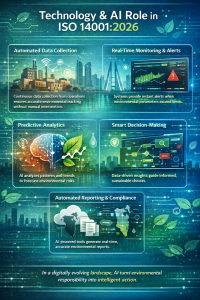
From Reactive Systems to Continuous Environmental Intelligence
ISO 14001:2026 introduces a major shift from traditional systems to continuous environmental intelligence, where organizations actively monitor and manage their environmental impact.
- Real-time monitoring becomes essential – Businesses must continuously track emissions, waste, and energy usage to maintain control and accuracy.
- Predictive risk management becomes critical – Organizations are expected to identify potential risks early and prevent them before they escalate.
- Data-driven decisions replace assumptions – Reliable insights improve operational performance and support strategic planning.
This transformation ensures environmental management is proactive, responsive, and performance-focused.
How Technology Is Reshaping Environmental Compliance?
Technology plays a central role in ISO 14001:2026, enabling organizations to meet higher expectations with greater efficiency.
- Continuous data tracking improves visibility – Businesses gain real-time insights into environmental performance.
- Automation simplifies reporting processes – Reduces manual effort and increases accuracy in compliance activities.
- Faster response systems reduce risks – Immediate action prevents environmental issues from escalating.
With AI and digital tools, organizations can achieve predictive and intelligent environmental management, enhancing both efficiency and reliability.
What Challenges Should Organizations Prepare For?
Adapting to ISO 14001:2026 requires more than adopting new technologies—it demands a shift in mindset and operational structure. Many businesses may struggle to integrate environmental practices into their core processes.
The need for real-time monitoring and cross-functional coordination can increase complexity. Additionally, limited expertise or resources may slow down implementation.
Strong leadership involvement is essential to ensure alignment, accountability, and successful execution.
Why This Shift Creates Long-Term Business Value?
ISO 14001:2026 offers more than compliance—it creates opportunities for efficiency, innovation, and growth. Businesses can reduce waste, optimize resources, and improve operational performance.
Transparent environmental practices also build trust with stakeholders, enhancing brand reputation and market positioning.
For organizations in Bahrain, early adoption can provide a competitive advantage and long-term resilience.
What Should Be Your First Move?
Preparing for ISO 14001:2026 requires a structured and proactive approach. Organizations must assess their current systems and align them with new requirements.
- Conduct a gap analysis of environmental processes – Identify areas that need improvement and create a clear roadmap.
- Invest in real-time monitoring tools – Enable continuous tracking and faster response to environmental changes.
- Train teams on modern environmental practices – Build internal capability for effective implementation.
- Align sustainability goals with business strategy – Ensure environmental objectives support growth.
- Strengthen leadership involvement – Drive accountability and ensure consistent execution.
How Will ISO 14001:2026 Impact Key Industries?
Industries with higher environmental impact, such as manufacturing, construction, and energy, will experience more significant changes. These sectors will need to adopt advanced monitoring systems and strengthen risk management practices.
Service sectors will also need to improve transparency and reporting. Overall, every industry will need to enhance its environmental management approach to remain competitive.
How Can Businesses Stay Ahead in This Changing Landscape?
To stay competitive, organizations must go beyond compliance and focus on continuous improvement, innovation, and adaptability.
- Strengthen real-time environmental visibility – Implement systems that provide continuous insights for better decision-making.
- Integrate sustainability into core operations – Ensure environmental practices are embedded across all departments.
- Use predictive analytics for better planning – Anticipate risks and improve long-term strategies.
- Improve transparency and communication – Provide clear, data-backed reporting to build trust.
- Invest in workforce development – Train employees to adapt to new technologies and evolving requirements.
What Benefits Can Organizations Expect?
- Improved efficiency and cost savings – Optimized resource usage reduces waste and operational costs.
- Stronger compliance and reduced risks – Continuous monitoring ensures alignment with regulations.
- Enhanced brand reputation – Transparent performance builds trust and credibility.
- Better resilience and stability – Proactive strategies reduce disruptions.
- Increased competitiveness – Strong sustainability practices attract global opportunities.
Is ISO 14001:2026 a Strategic Investment?
Implementing ISO 14001:2026 requires investment in systems, training, and process improvements. However, the long-term benefits make it a strategic decision.
Organizations can achieve cost savings through improved efficiency and reduced waste, while stronger environmental performance enhances credibility and supports business growth. Businesses that treat ISO 14001:2026 as an investment are more likely to achieve sustainable success and long-term resilience.
- Improved access to global markets and partnerships – Strong environmental practices attract international clients and expand opportunities.
- Better regulatory readiness and reduced risks – Proactive management helps avoid penalties and compliance issues.
- Enhanced innovation and agility – Continuous improvement drives smarter and more adaptable operations.
Final Thought
ISO 14001:2026 is not just a compliance requirement—it is a strategic transformation.
Organizations that act early will gain efficiency, credibility, and growth opportunities, while those that delay risk falling behind in an increasingly sustainability-driven world.


