


What to Expect from ISO 9001:2026 – Important Changes Explained?
ISO 9001:2026 is set to introduce a modernized approach to quality management, reflecting the way businesses operate today. With increasing reliance on digital systems, growing environmental concerns, and more interconnected global operations, the updated standard is designed to help organizations remain efficient, resilient, and competitive.
This revision is not just about maintaining compliance—it focuses on improving how organizations think, plan, and perform. For companies expanding internationally, including those in the UAE, ISO 9001:2026 presents an opportunity to enhance their Quality Management System (QMS) and align with evolving global expectations.
Why ISO 9001:2026 Signals a New Era?
The ISO 9001:2015 standard introduced risk-based thinking and process-oriented management, which significantly improved organizational consistency. However, the business landscape has changed rapidly since then.
ISO 9001:2026 builds on this foundation by addressing modern challenges such as digital transformation, sustainability pressures, and supply chain complexities. It shifts quality management from being reactive to proactive, encouraging organizations to anticipate risks and adapt quickly.
Key Areas of Change in ISO 9001:2026
Environmental Considerations Integrated into Quality Systems
Organizations are now expected to take a structured approach in evaluating how environmental factors, including climate-related risks, impact their operations. This involves identifying potential risks such as regulatory changes, resource availability, and environmental disruptions that could influence product or service quality.
If these factors are relevant, they must be integrated into planning, risk assessment, and continuous improvement processes. By doing so, organizations can align their quality objectives with sustainability goals, ensuring long-term operational stability and responsible business practices.
Digital Transformation and System Reliability
As businesses increasingly depend on digital tools, automation, and data-driven processes, ISO 9001:2026 emphasizes the need for strong governance and control over these systems. Organizations must ensure that technology supports quality outcomes rather than introducing new risks.
This includes validating system accuracy, maintaining data integrity, and ensuring transparency in digital workflows. Additionally, organizations are expected to invest in employee training to ensure teams can effectively manage and operate evolving technologies.
Important focus areas include:
• Monitoring automated processes for accuracy and consistency
• Ensuring data protection and integrity across systems
• Maintaining clear and structured digital documentation
• Enhancing employee skills to work with evolving technologies
Stronger Oversight of Supply Chains
Supply chains have become more complex and interconnected, making them a critical factor in maintaining consistent quality. ISO 9001:2026 requires organizations to adopt a more proactive and strategic approach in managing external providers.
This includes evaluating supplier performance, identifying potential risks, and ensuring that contingency plans are in place to handle disruptions. By strengthening supplier relationships and improving communication, organizations can ensure reliability, reduce delays, and maintain consistent quality standards.
Knowledge Management as a Core Requirement
Knowledge is now recognized as a valuable organizational asset that directly impacts efficiency and consistency. ISO 9001:2026 encourages businesses to establish systems for capturing, storing, and sharing critical knowledge across the organization.
This includes documenting best practices, standardizing procedures, and ensuring that key information is accessible to employees when needed. Effective knowledge management reduces dependency on individuals, supports continuity, and enhances decision-making capabilities.
Employee Engagement and Quality Culture
The updated standard places significant importance on the role of employees in achieving quality objectives. Organizations are encouraged to build a culture where quality is not limited to a specific department but is a shared responsibility across all levels.
This involves improving communication, providing continuous training, and encouraging employee participation in improvement initiatives. A strong quality culture leads to better collaboration, increased accountability, and higher overall performance.
Flexibility through Outcome-Based Requirements
ISO 9001:2026 introduces a shift from rigid, procedure-driven requirements to a more flexible, outcome-focused approach. Organizations are no longer required to follow strict methods but are instead evaluated based on the results they achieve.
This flexibility allows businesses to design processes that align with their specific operations while still meeting the standard’s objectives. It encourages innovation, adaptability, and continuous improvement, making quality management more practical and effective in real-world scenarios.
How Will ISO 9001:2026 Affect Your Current Certification?
Many organizations are concerned about whether their existing certification will remain valid. The good news is that current certifications will continue during the transition period provided by certification bodies.
However, businesses must upgrade to the new version within the given timeframe to maintain compliance. Early preparation reduces risk and ensures a smooth transition without affecting operations.
What Are the Immediate Actions Businesses Should Take?
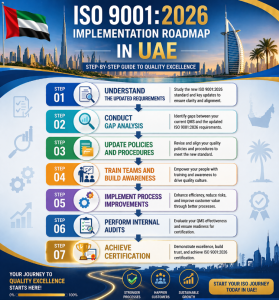
Understanding what to do first is a common challenge. Organizations should focus on building a clear transition plan rather than rushing into changes.
Recommended actions include:
- Conducting a gap analysis to identify missing elements
- Reviewing digital and environmental risks
- Updating internal documentation
- Training employees and internal auditors
Organizations in the UAE and other global regions are already taking proactive steps to stay ahead of these requirements.
How ISO 9001:2026 Improves Customer Confidence?
Customers today expect consistent quality, transparency, and reliability. ISO 9001:2026 strengthens internal processes, ensuring better control over operations and improved service delivery.
With enhanced supplier management, accurate data systems, and engaged employees, organizations can deliver higher quality outcomes. This builds trust, improves brand reputation, and strengthens long-term customer relationships.
How ISO 9001:2026 Enhances Business Value?
ISO 9001:2026 is not just about compliance—it is designed to deliver real business benefits. By adopting the new requirements, organizations can improve efficiency, reduce risks, and strengthen their overall performance.
Key advantages include:
- Improved risk identification and proactive management
- Stronger supplier relationships and reliability
- Enhanced efficiency through digital integration
- Increased employee engagement and accountability
- Greater customer trust and satisfaction
Final Thoughts: Preparing for what’s next
ISO 9001:2026 represents a forward-thinking approach to quality management. By integrating sustainability, digital transformation, and employee engagement, it creates a framework that supports long-term success.
Organizations that prepare early will not only meet compliance requirements but also gain a competitive advantage. By embracing the changes now, businesses can build stronger systems, improve performance, and confidently move toward the future.